
What is SEO?
SEO stands for Search Engine Optimization. Search Engines like Google, Bing, Brave, etc. provide information on the keywords typed in the search text box. SEO aims to make sure that your website’s visibility and ranking is high on the search result pages (SERPs) by optimizing various aspects of the site.
The 4 Types of SEO
Understanding the four primary types of SEO is essential for effective SEO management and crafting a comprehensive SEO strategy. Each type plays a distinct role in improving a website’s visibility and driving SEO traffic.
By addressing all four areas:
- Technical SEO,
- On-Page SEO,
- Off-Page SEO, and
- Local SEO
you can ensure that your site is fully optimized to meet search engine requirements and user expectations.
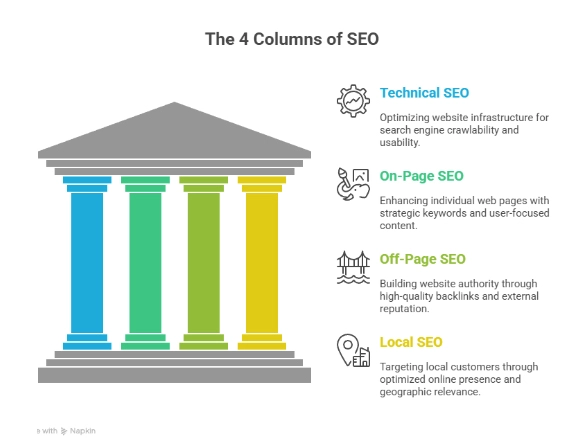
Technical SEO
Technical SEO focuses on optimizing the infrastructure of your website, ensuring that search engines can easily crawl, index, and rank your pages. This includes tasks such as improving site speed, enhancing mobile usability, and fixing crawl errors.
On-Page SEO
On-Page SEO involves optimizing individual pages on your website to rank higher and earn more relevant traffic in search engines. This includes the strategic placement of keywords, optimizing meta tags, and ensuring content is aligned with user intent.
Off-Page SEO
Off-Page SEO focuses on building your website’s authority and reputation through external means, primarily through backlink management and link profile building. This involves acquiring high-quality backlinks from reputable sites, which signals to search engines that your content is valuable and trustworthy.
Local SEO
Local SEO is a specialized form of SEO that helps businesses promote their products and services to local customers. It involves optimizing your website and online presence to rank better for local searches, which is particularly important for businesses with a physical location or those serving specific geographic areas.
Smallthings can assist you in all four areas of SEO. We have a proven track record of successfully creating and implementing various SEO strategies, providing full-scale SEO Management to our clients.
SEO Management – What is it, and what SEO Tasks Need it?
At its core SEO management refers to the ongoing process of managing and optimizing a website’s SEO strategy.
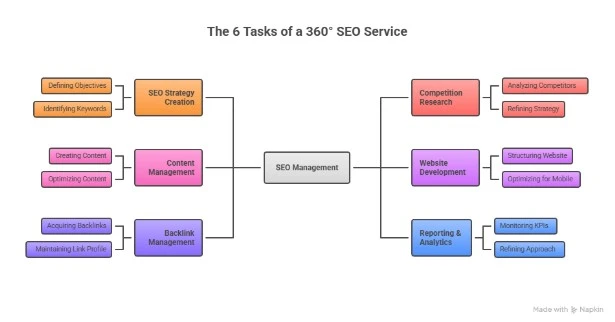
Encompasses all 4 types of SEO, and breaks it down into different SEO tasks that are recommended to be managed under one umbrella for better coordination and oversight.
It is responsible for creating and executing an effective SEO strategy.
SEO Strategy Creation
Creating an effective SEO strategy is the foundation of successful SEO management. This process involves defining clear objectives, identifying target keywords, and outlining the necessary SEO tasks to achieve these goals. By aligning the strategy with business objectives, you ensure that each component—from content creation to technical SEO—works together to drive SEO traffic and improve search engine rankings.
Competition Research
Competition research is a critical element of SEO campaign management. It involves analyzing competitors’ SEO strategies to identify strengths, weaknesses, and opportunities. By understanding what keywords competitors are ranking for and how they structure their content, businesses can refine their own SEO strategy to gain a competitive edge and capture more SEO traffic.
Content Management
SEO Content management includes the creation, optimization, and updating of content to align with target keywords and user intent. Effective content management ensures that your site consistently delivers value to users while also meeting the evolving requirements of search engines, thereby supporting overall SEO management efforts.
Website Development
A well-structured, fast, and mobile-friendly website enhances user experience and supports key SEO goals, such as improving site rankings and driving SEO traffic. Integrating best practices into the website development process ensures that the site is optimized for search engines from the ground up.
Backlink Management – Linkprofile Building
Backlink management and link profile building are essential components of SEO strategy. Acquiring high-quality backlinks from reputable sources boosts domain authority and improves a site’s ranking potential. Ongoing backlink management is crucial to maintaining a healthy link profile, which is a significant factor in SEO campaign management and overall search engine visibility.
Reporting & Analytics
Reporting and analytics are vital for tracking the success of your SEO strategy. These tasks involve monitoring key performance indicators (KPIs), such as organic traffic, keyword rankings, and conversion rates. By regularly analyzing this data, businesses can refine their SEO management approach, ensuring that SEO tasks are effectively contributing to the achievement of strategic objectives.
From managing singular SEO tasks, through SEO campaign management, to complete website overhauls anything can be considered as part of the work of the SEO Management Team.
Smallthings 360° – Data-backed Results in SEO Management
Many times SEO seems to be a mystery to our clients. Many times SEO “consultants” act like mystics.
By using metrics directly from Google Applications like Google Analytics 4 (GA4), Google Search Console (GSC), Chrome User Experience Report (CruX), and from third-party SEO analytics software, (Ahrefs, SEMRush, Screaming Frog, GTMetrix, etc.) we eliminate the guesswork concerning our effectiveness.
The 7 Principles of an Effective SEO Strategy used by Smallthings to achieve the results above
1. User-centered Content
User-centered content focuses on creating valuable, relevant, and engaging material tailored to the needs of the target audience. This approach not only enhances user experience but also aligns with SEO management goals by improving content visibility and driving SEO traffic.
2. Indexability, Crawlability
Indexability and crawlability are critical components of technical SEO that ensure search engines can access, interpret, and rank your website’s content.
3. User Experience on Site
User experience (UX) on-site is a key factor in search engine optimization management. A positive UX, characterized by fast load times, mobile-friendliness, and intuitive navigation, not only boosts user engagement but also contributes to better search engine rankings.
4. Backlink Building – Achieve High Domain Rating
Backlink building is an essential off-page SEO task that involves acquiring high-quality links from reputable websites. Effective backlink management strengthens a site’s authority and improves its ranking potential. Even though Google claimed they do not directly use “domain rating” in the ranking algorithm leaks prove that such influences do exist.
5. Performance Monitoring
Performance monitoring is a crucial aspect of SEO campaign management. It involves tracking key metrics like keyword rankings, organic traffic, and conversion rates to assess the effectiveness of SEO strategies. Continuous performance monitoring allows SEO managers to make data-driven decisions and refine strategies for optimal results.
6. Fine Tuning
Fine-tuning refers to the ongoing adjustments made to an SEO strategy based on performance data and changing search engine algorithms. This process ensures that SEO tasks remain aligned with business objectives and continue to drive desired outcomes.
7. Don’t waste Content – SEO Optimization
Maximizing the value of existing content through optimization is essential for maintaining its relevance and effectiveness. This involves updating and repurposing content to align with current SEO recommendations and user needs.

The Core Of Every Successful SEO Campaign – The Keyword Research
If your SEO plan includes any type of content creation to gain traffic one thing is sure: you’ll need a rock-solid Keyword Research.
At Smallthings, we specialize in conducting complex, thorough keyword research with exported versions that are also easily understandable by the client. By making strategic decisions like selecting core keywords and prioritizing target keywords together we can make sure that our SEO plans are in tandem with your business goals.
How Can We Assist in Your SEO Management?
Our comprehensive SEO management services cover all aspects of optimizing your website for better search engine performance and increased SEO traffic. Here’s how we can help:
SEO Audit Services
By creating a 360 degree SEO audit focusing on all 4 areas of SEO we can pinpoint priorities and low-hanging fruits that would help your visibility the best.
On-page SEO Services
Our on-page SEO specialists optimize content, meta tags, and structure to improve individual page rankings.
SEO Campaign Management
We manage your entire SEO strategy, coordinating SEO tasks, tracking progress, and adjusting tactics to drive long-term results.
Keyword Research Services
We identify high-impact keywords tailored to your business, ensuring your content targets the right audience.
Competitor Research
By understanding which keywords your direct competitors rank for, their backlink strategies, and the structure of their content, you can fine-tune your own SEO tactics to outperform them.
Page Speed Optimization – Google Core Web Vitals
We optimize your site’s performance, focusing on load times, interactivity, and stability to meet Google’s Core Web Vitals, which are important for a good user experience and high organic traffic.
FAQ – SEO Management Services
SEO management is the process of overseeing and coordinating tasks in all 4 areas of SEO aiming at improving a website’s visibility in search engine results. It involves developing and executing an effective SEO strategy that aligns with business goals, including keyword optimization, content creation, and technical adjustments.
Off-Page SEO refers to actions taken outside of your website to impact its rankings within search engine results. It mainly involves backlink management, or backlink building – acquiring high-quality links from reputable sites. By improving the number and quality of backlinks, you build authority in the eyes of search engines, which signals that your content is valuable and trustworthy.
Technical SEO focuses on optimizing the infrastructure of a website to ensure that it can be easily crawled, indexed, and ranked by search engines. Important elements include:
- Site Speed: Enhancing page load times for better user experience and rankings.
- Mobile Usability: Ensuring the site is mobile-friendly.
- Crawlability and Indexability: Fixing crawl errors and optimizing robots.txt files to help search engines better understand the structure of your site.
As an “all-round” Digital Marketing Agency, SmallThings 360° can assist you wherever you are on your website building journey. From creating engaging and well-converting websites through optimization to complete design, tech & content overhauls – we are here to help.
SEO keyword research is essential in campaigns because it identifies the search terms users are entering into search engines. By targeting these keywords with content, meta tags, and other SEO elements, companies and individuals can align their websites with what users are searching for, improving visibility and well-converting SEO traffic.
SEO (Search Engine Optimization) and PPC (Pay-Per-Click) are two distinct digital marketing strategies aimed at driving traffic to a website.
- SEO focuses on optimizing a website to improve organic rankings in search engine results. It involves ongoing SEO tasks such as keyword optimization, content creation, and technical adjustments to boost long-term visibility and increase SEO traffic.
- PPC Marketing, on the other hand, involves paying for ads that appear at the top of search engine results pages. With PPC, businesses pay for each click on their ads, providing immediate visibility but at a cost.
In short, SEO vs. PPC comes down to long-term organic growth versus immediate, paid traffic generation. Both can be effective, depending on the business goals and budget.
At Smallthings 360°, we can assist you in both.
Paid traffic, such as PPC marketing, does not directly influence organic rankings in search engines. SEO and PPC are separate tools: SEO focuses on organic growth, while paid traffic relies on advertisements. However, paid traffic can indirectly help SEO in a few ways, e.g.: by increasing website visibility, driving more users to your site, and improving overall engagement metrics like time on site or conversion rates.