In today’s crowded online marketplace, businesses need to be smart about how they attract potential customers. One of the most effective ways to ensure visibility and generate qualified traffic is through PPC (Pay-Per-Click) advertising. However, simply launching ads isn’t enough—this is where expert PPC management services come into play.
Managing PPC campaigns effectively requires a combination of strategic planning, real-time monitoring, and data-driven adjustments. Let’s dive deeper into what PPC management is, why it’s so critical for your business, and how the right PPC management service can skyrocket your growth.
Understanding PPC: More Than Just Paid Clicks
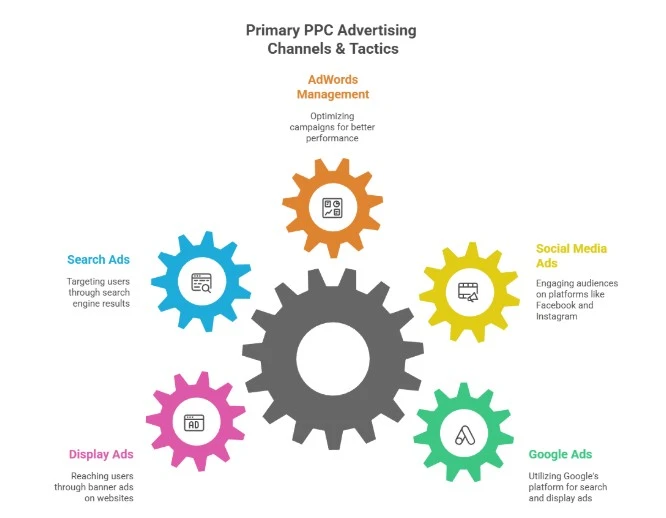
Before exploring the ins and outs of PPC management, it’s important to understand what PPC advertising really is. PPC is a model of internet marketing in which advertisers pay a fee each time one of their ads is clicked. In essence, it’s a way of buying visits to your site, rather than earning them organically.
One of the key benefits of PPC is its versatility. It can be used on a wide range of platforms, from Google Ads to social media channels like Facebook, Instagram, and LinkedIn. However, the most popular PPC service is Google’s AdWords PPC management, which covers both search ads (those you see at the top of Google search results) and display ads (banner-like ads on partner websites).
While PPC sounds straightforward, there’s a lot more happening behind the scenes. The complexity increases as you scale campaigns, target specific demographics, and refine your strategies based on performance data.
What is PPC Management?
PPC management is the process of overseeing and optimizing PPC campaigns to ensure they deliver the best possible results. This involves several critical tasks, such as conducting keyword research, setting up the campaigns, monitoring their performance, and adjusting bids and targeting to achieve the best ROI.
Whether you’re running ads on Google, Bing, or social media, managing PPC effectively requires time, expertise, and a well-structured approach. If done right, PPC advertising can bring in a high volume of traffic and leads. But poorly managed PPC campaigns can lead to overspending without the results to justify the costs.
Why You Need PPC Management Services
Partnering with a professional PPC management agency allows you to focus on your core business while a team of experts fine-tunes your campaigns. Here are some of the key reasons why businesses of all sizes—from startups to established enterprises—choose to invest in PPC management services:
- Maximizing ROI: PPC management agencies specialize in optimizing campaigns to get the most out of every dollar spent. They analyze performance data in real-time, making tweaks to improve ad efficiency and conversions.
- Expert Knowledge: PPC is not a one-size-fits-all solution. Different industries, markets, and products require tailored approaches. Experienced PPC managers understand these nuances and craft campaigns designed for your business’s specific needs.
- Access to Advanced Tools: The top PPC agencies use advanced software and analytics tools that are often too expensive or complex for in-house teams to manage. These tools allow for more accurate performance tracking and faster, data-driven decisions.
- Targeted Campaigns: From local PPC management for small businesses to advanced eCommerce PPC management, a good agency knows how to target your ads to specific audiences, whether by location, interests, or purchasing behaviors.
Core Components of PPC Campaign Management
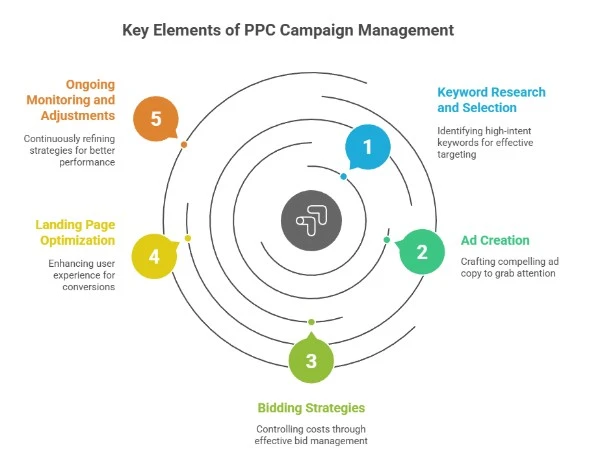
Managing a PPC campaign isn’t just about setting up ads and letting them run. Effective PPC campaign management involves ongoing optimization and a focus on several key areas:
- Keyword Research and Selection: Choosing the right keywords is one of the most important aspects of PPC advertising. Keywords with high intent, those that signal a potential customer is ready to buy, are especially valuable. Tools like Google Keyword Planner and SEMrush help PPC managers identify the best opportunities.
- Ad Creation: Crafting compelling ad copy is an art form. Your ads need to grab attention, communicate your value proposition, and encourage clicks—all within a limited character count. PPC managers specialize in creating ads that are not only attractive but also aligned with user search intent.
- Bidding Strategies: Every PPC campaign requires a solid bidding strategy to control costs. Whether you’re focusing on Google AdWords PPC management or social media ads, setting the right bids ensures you’re not overspending for clicks. PPC management experts know how to balance aggressive bidding for competitive keywords with more budget-friendly strategies for niche markets.
- Landing Page Optimization: Once a user clicks on your ad, they land on a specific page designed to convert that visit into a lead or sale. PPC managers work closely with web designers and marketers to ensure that the landing pages are optimized for user experience, fast load times, and strong calls-to-action.
- Ongoing Monitoring and Adjustments: PPC campaigns are not static. Continuous monitoring and regular adjustments are necessary to improve results over time. Whether it’s tweaking ad copy, adjusting bids, or experimenting with different targeting options, a PPC manager’s job is to constantly refine the strategy to deliver better performance.
PPC Management Tools & Platforms
At SmallThings 360°, we use advanced PPC management tools to deliver performance:
- Google Ads & Microsoft Ads for paid search and display.
- GA4 & Google Tag Manager for conversion tracking.
- Ahrefs, SEMrush & SpyFu for keyword and competitor analysis.
- Meta Ads Manager & LinkedIn Campaign Manager for social PPC campaigns.
How SmallThings 360° Optimizes Your PPC Campaigns
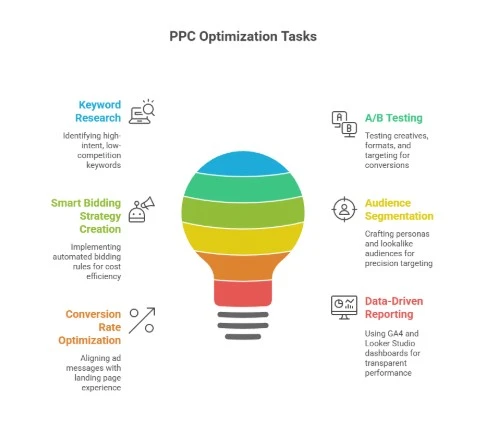
- Comprehensive Keyword Research – Identifying the best balance of high-intent and low-competition keywords.
- A/B Testing – Testing creatives, formats, and targeting to increase conversion rate.
- Smart Bidding Strategies – Implementing automated bidding rules for cost efficiency.
- Audience Segmentation – Crafting personas and lookalike audiences for precision targeting.
- Conversion Rate Optimization (CRO) – Aligning ad messages with landing page experience.
- Data-Driven Reporting – Using GA4 and Looker Studio dashboards for transparent performance.
Why Choose SmallThings 360° for PPC Management?
We combine strategic insight with real-time analytics. As a Google PPC management company, our advantage lies in integrating PPC with SEO, analytics, and CRO — all developed in-house. Our proprietary applications such as BudgetSync (for multi-account budget control) and ClickFlow (for dynamic ad rotation optimization) allow us to deliver granular precision and cost savings up to 30% per campaign.
How We Will Work Together
- Initial Audit: We assess your account setup and keyword strategy.
- Strategy Creation: Based on your objectives, we define budget allocation, targeting, and ad clusters.
- Execution: We launch and monitor campaigns across Google, Meta, and LinkedIn Ads.
- Ongoing Optimization: Continuous bid refinement and creative testing ensure sustained results.
- Reporting: Transparent, performance-focused dashboards and monthly strategy calls.
SEO and PPC Management: The Perfect Pairing
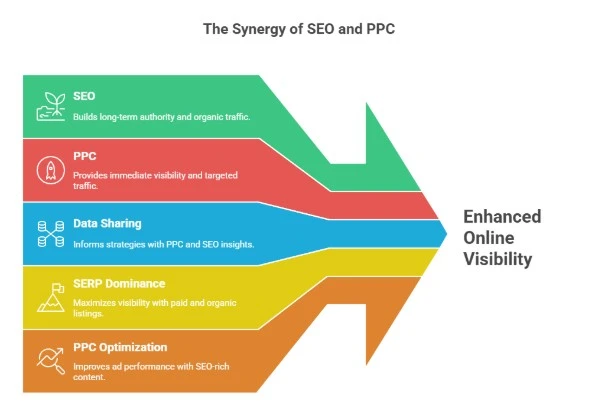
While PPC focuses on paid ads, combining it with SEO (Search Engine Optimization) creates a powerful one-two punch for your online marketing strategy. While PPC gives you instant visibility at the top of search engine results, SEO helps build your site’s authority over time.
Combining SEO and PPC management allows businesses to gather valuable data from their paid campaigns to inform their organic strategy. For example, high-converting keywords discovered through PPC can be incorporated into your SEO content. Conversely, SEO insights can help refine your PPC targeting to focus on more relevant audiences.
Boosting SEO with PPC Data
One of the major benefits of combining these two strategies is data sharing. PPC campaigns provide rapid feedback on which keywords are driving the most conversions and which landing pages perform best. This information is invaluable for your SEO strategy, as it allows you to target organic traffic based on the keywords and content that already show strong performance in your paid campaigns. This synergy optimizes both your paid and organic results by focusing on what actually works, rather than guesswork.
For example, if your PPC campaign shows that certain keywords convert exceptionally well, you can prioritize these keywords in your SEO efforts by integrating them into your website’s content, title tags, and meta descriptions.
Increasing Visibility on SERPs
Another significant advantage of combining PPC and SEO management is dominating the search engine results pages (SERPs). When your website appears both in the paid results at the top and organically in the first few positions, you effectively double your visibility. This maximizes your chances of getting clicks from users searching for your keywords and creates a sense of credibility and trust. Users are more likely to engage with brands they see multiple times on a search result page, as it reinforces brand recognition and authority.
A list of key benefits of combining PPC and SEO includes:
- Shared Keyword Data: PPC campaigns identify top-performing keywords that can enhance SEO efforts.
- Enhanced SERP Real Estate: Appearing in both paid and organic listings increases click-through rates and overall visibility.
- Faster Results: While SEO takes time to build, PPC provides immediate traffic that keeps your website active and competitive while organic rankings grow.
Improving PPC Campaigns with SEO
On the other side, SEO can positively influence your PPC campaigns. For example, having well-optimized, SEO-rich landing pages can increase the Quality Score of your Google Ads, reducing the cost per click (CPC) and improving ad performance. Google rewards well-structured, relevant content, so if your landing pages are optimized for SEO, they’re more likely to perform well in PPC, which lowers ad costs and improves the ranking of your ads.
In addition, PPC retargeting can enhance SEO efforts by drawing users back to your site who may have visited previously through an organic search but didn’t convert. Through remarketing ads, you can remind potential customers of your offerings, increasing the likelihood they will return and convert during a future organic search(
By leveraging both strategies, businesses can not only enjoy immediate traffic through PPC but also ensure long-term growth through organic SEO efforts. The combination of PPC’s speed and SEO’s trust-building authority ensures that your marketing strategy is optimized for both short-term success and sustained visibility.
When Should You Use PPC Management Services?
Whether you’re running ads for a small business or a global eCommerce brand, investing in PPC management services can drastically improve your ad performance and overall marketing success. By outsourcing to a PPC management agency, you can leverage expert knowledge, advanced tools, and years of experience to ensure your campaigns deliver measurable results.
Ready to take your PPC campaigns to the next level? Get in touch with our team today for a free consultation on how we can help manage and optimize your PPC efforts.
FAQ – PPC Management
PPC stands for Pay-Per-Click, a digital advertising model where advertisers pay each time a user clicks on their ad. This model is used in platforms like Google Ads, Bing Ads, and social media networks like Facebook and LinkedIn. It allows businesses to drive targeted traffic to their websites by paying for clicks, not impressions.
The success of any PPC campaign hinges largely on the skill and experience of the PPC manager. This role involves far more than simply setting up ads. A PPC campaign manager is responsible for every aspect of the campaign’s performance, from initial planning and keyword research to bid management, ad optimization, and performance reporting.
Investing in PPC management services can offer several valuable benefits for your business. Here are the most important ones:
- Higher ROI: Expert PPC managers optimize your campaigns to ensure that each click leads to high-quality traffic and conversions, making the most of your ad spend.
- Real-Time Adjustments: With ongoing monitoring, PPC managers can make quick adjustments to bids, keywords, and targeting based on current performance.
- Targeted Advertising: PPC services allow for highly focused targeting options, whether you’re aiming for specific demographics, geographic areas, or user behaviors.
- Data-Driven Strategy: PPC management involves constant analysis of data, helping businesses make informed decisions about ad performance and future campaigns.
- Comprehensive Reporting: With professional PPC management, you’ll receive detailed reports outlining key performance metrics like click-through rates (CTR), conversion rates, and cost-per-click (CPC).
AdWords PPC management refers to managing pay-per-click advertising campaigns on Google Ads (formerly known as AdWords). This includes creating ads that appear in Google search results, display ads on partner websites, and managing shopping ads for eCommerce businesses. Proper Google AdWords PPC management ensures that your ads reach the right audience, delivering high-quality traffic to your site.
For small businesses, PPC management is crucial for optimizing a limited advertising budget. Here’s how:
- Local Targeting: Small businesses can use local PPC management to target specific areas, ensuring that ads are shown only to nearby customers.
- Budget Flexibility: PPC allows small businesses to control costs and only pay for clicks, making it possible to operate within a smaller budget.
- Niche Keywords: By focusing on long-tail, less competitive keywords, small businesses can reduce ad spend while still reaching a highly relevant audience.
- Immediate Results: Unlike SEO, which takes time to build organic traffic, PPC provides instant visibility and traffic as soon as the campaign is live.
For eCommerce businesses, PPC management can significantly boost online sales. Ecommerce PPC management focuses on product-specific ads like Google Shopping Ads, which showcase your products directly in the search results with pricing and images. By optimizing product feeds, keywords, and bids, an eCommerce PPC agency ensures that your products get in front of the most likely buyers, increasing both traffic and sales.
Several factors influence the cost of PPC campaigns, and understanding them can help you manage your budget more effectively:
- Keyword Competition: Highly competitive keywords (e.g., “insurance”) cost more because multiple businesses are bidding on them.
- Ad Quality: Google’s quality score affects how much you pay per click. Higher-quality ads with better relevance and engagement may cost less.
- Target Audience: The more specific your audience (e.g., targeting by demographics, location, interests), the higher the potential cost.
- Bidding Strategy: Choosing an aggressive bidding strategy to dominate the top ad positions can raise costs.
- Ad Placement: Ads placed in premium spots, such as at the top of search engine results pages (SERPs), typically cost more per click.
Tracking the right metrics is key to measuring the success of your PPC campaigns. The most important PPC performance metrics include:
- Click-Through Rate (CTR): The percentage of people who clicked on your ad after seeing it. A higher CTR indicates better ad relevance and engagement.
- Cost-Per-Click (CPC): The amount you pay for each click. Lower CPCs combined with high-quality traffic lead to better ROI.
- Conversion Rate: The percentage of users who took the desired action (e.g., a purchase or sign-up) after clicking your ad.
- Quality Score: Google’s rating of your ad’s relevance, which affects both ad rank and CPC.
- Return on Ad Spend (ROAS): A key financial metric that measures how much revenue your ads generate relative to how much you spend.
PPC management services help you optimize your ad campaigns by improving keyword targeting, ad quality, and bidding strategies. By hiring a PPC management agency, businesses can focus on other important tasks while experts handle the complexities of campaign setup, monitoring, and adjustment. This ensures you get the most out of your PPC budget, maximizing visibility and conversions.
SmallThings 360° provides end-to-end PPC marketing and PPC management services designed to deliver measurable, cost-efficient growth across paid search and paid media channels. Our role is not limited to campaign execution — we act as a strategic PPC management agency that integrates data, technology, and continuous optimization into every advertising decision.
Our PPC support model is built around accountability, transparency, and performance control — the same principles Google emphasizes for sustainable paid advertising success (Google Ads Best Practices).
We begin every engagement with structured PPC campaign management planning. This includes defining business objectives, conversion goals, and the appropriate campaign architecture for scale.
Our setup process covers:
- Keyword intent mapping for pay-per-click management
- Campaign and ad group structuring aligned with Quality Score optimization
- Conversion tracking and GA4 integration
- Budget allocation frameworks for PPC budget management